Location: Ntshongweni, Kwa-Zulu Natal, South Africa
Year: 2014-2018
Client: Lead Architects & Catholic Archdiocese of Durban
Role: Architectural Consultant & Technical Specialist (CSEB) under Lead Architects
Scope:
Architectural research
CSEB design integration and specialist documentation
3D modeling and visualisation
Technical documentation for local authority submission and construction
Detailing for fabrication and CSEB construction quality control
Project Description:
Ntshongweni Chapel Restoration & Expansion
This heritage restoration and expansion formed part of a broader masterplan for the area. Our involvement took place under the guidance and mentorship of Lead Architects, contributing expertise in CSEB construction, research, design documentation, and technical support.
The site, a dramatic koppie with sweeping views toward the eastern escarpment, is home to a historic mission station established in the 1930s. At its summit stands a small stone-and-mud chapel, built in 1938 by Father Henry Wagner using locally mined stone. Stepping down the slope to the west are the convent and residential buildings, followed by a boarding house, a hall, and ablution facilities.
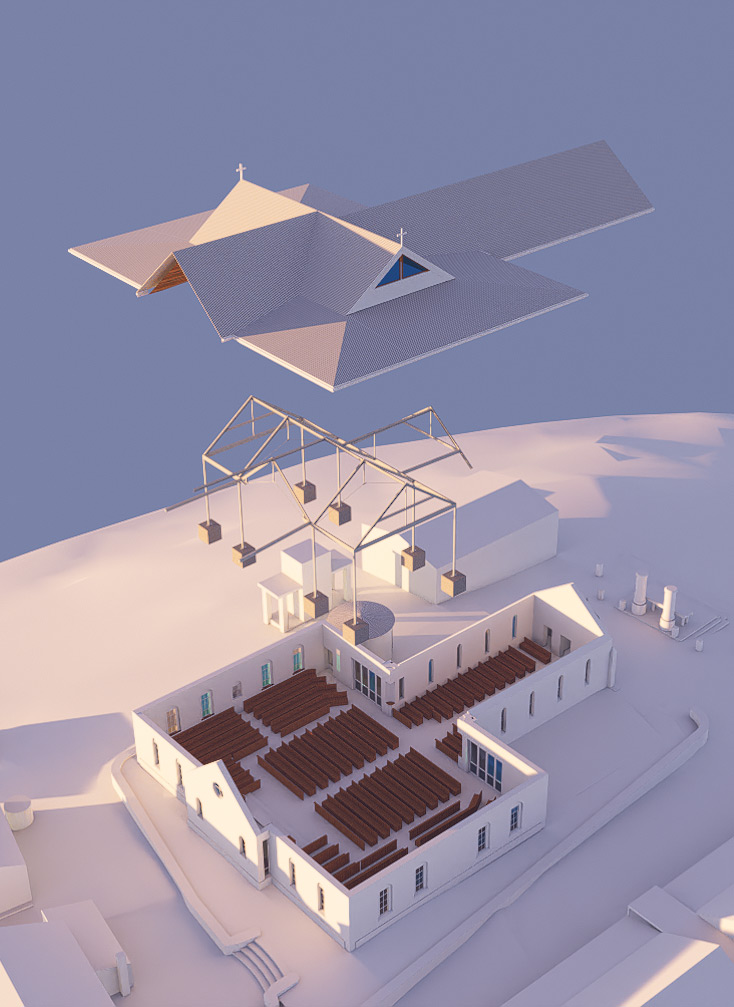
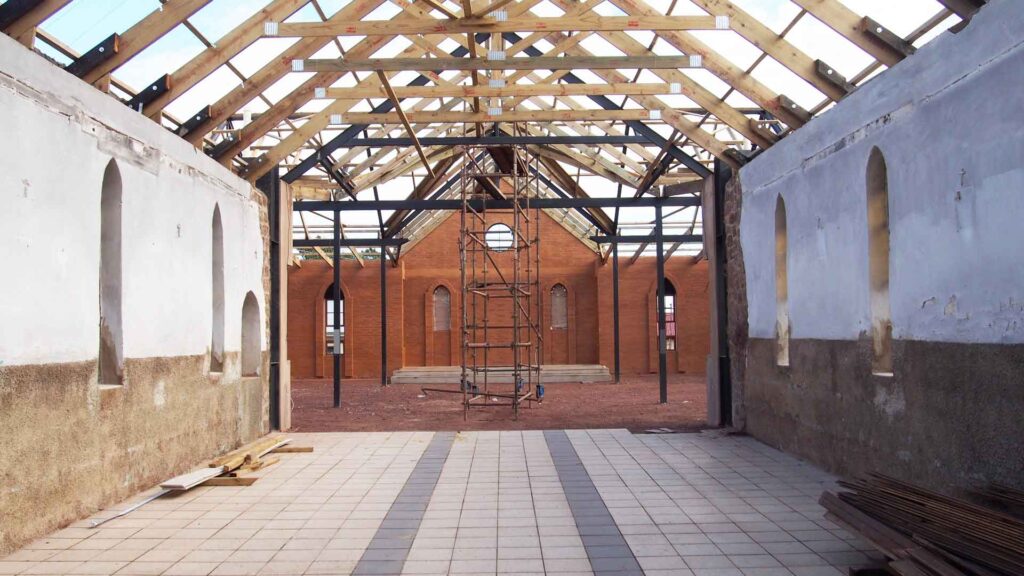
The brief called for a sensitive expansion of the original chapel, increasing its capacity from 90 to 450 seats. This required preserving the character and integrity of the existing structure while addressing specific liturgical requirements. Significant termite damage had compromised the original stone walls, necessitating careful repair and reconstruction. An original stone rondawel adjacent to the existing chapel was conserved and adapted to function as the vestry, reinforcing the project’s commitment to heritage integration.
Historical Context
1934: Arrival of Father Henry Wagner & Father Pfister (OMI) in South Africa 1938: Father Wagner constructs the chapel, naming it Albini 1939–1942: Wagner is called to serve in WWII 1943: Ntshongweni is established as a Mission Station 1953: Father Wagner initiates an annual pilgrimage to Ntshongweni, fulfilling a wartime vow to the Virgin Mary
Sustainable Materiality: CSEB Construction
All new walls were constructed using Compressed Stabilized Earth Blocks (CSEBs), specifically the “Rambrick” developed by local manufacturer Use-It. These blocks are made with recycled materials and stabilized using only 3–5% cement. Steel reinforcement was limited to ring beams, and the walls were left unplastered, requiring absolute precision in every course and junction. This necessitated detailed coordination and documentation, ensuring compliance with both structural and CSEB best practices.
Sustainability & Integration
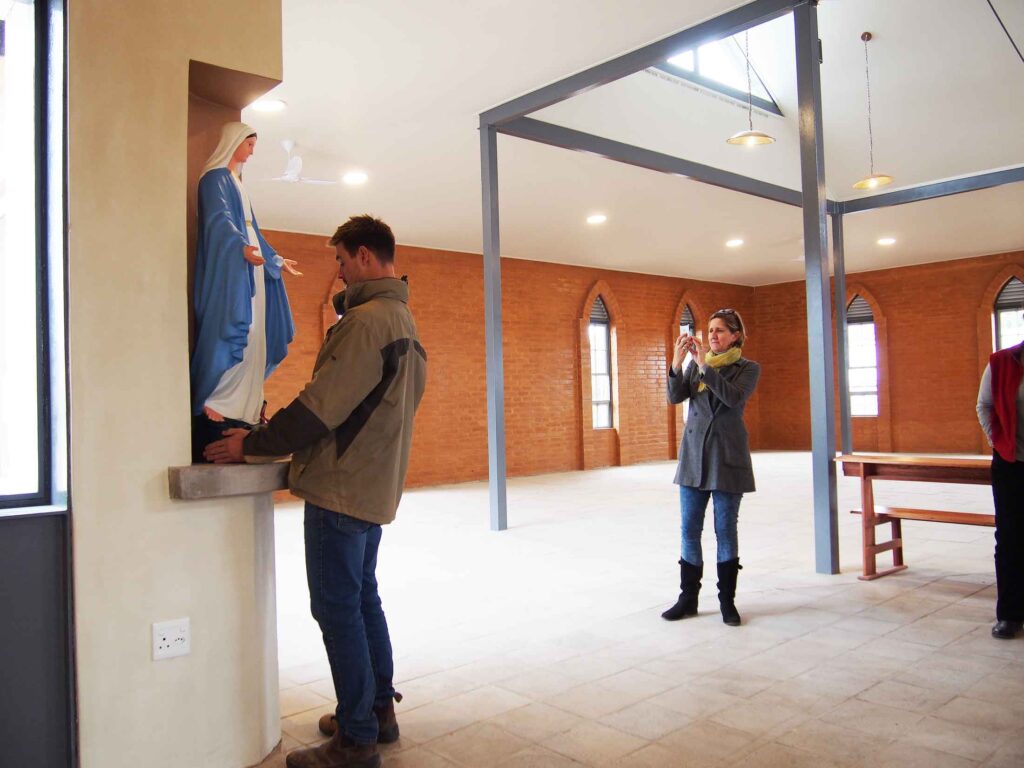
Wherever possible, original elements were carefully salvaged and reintroduced into the new design, notably, two stained glass windows and several religious statues. Custom niches were created within the new structural columns that mediate between the historic and contemporary elements, offering an integrated and reverent setting for these artefacts.
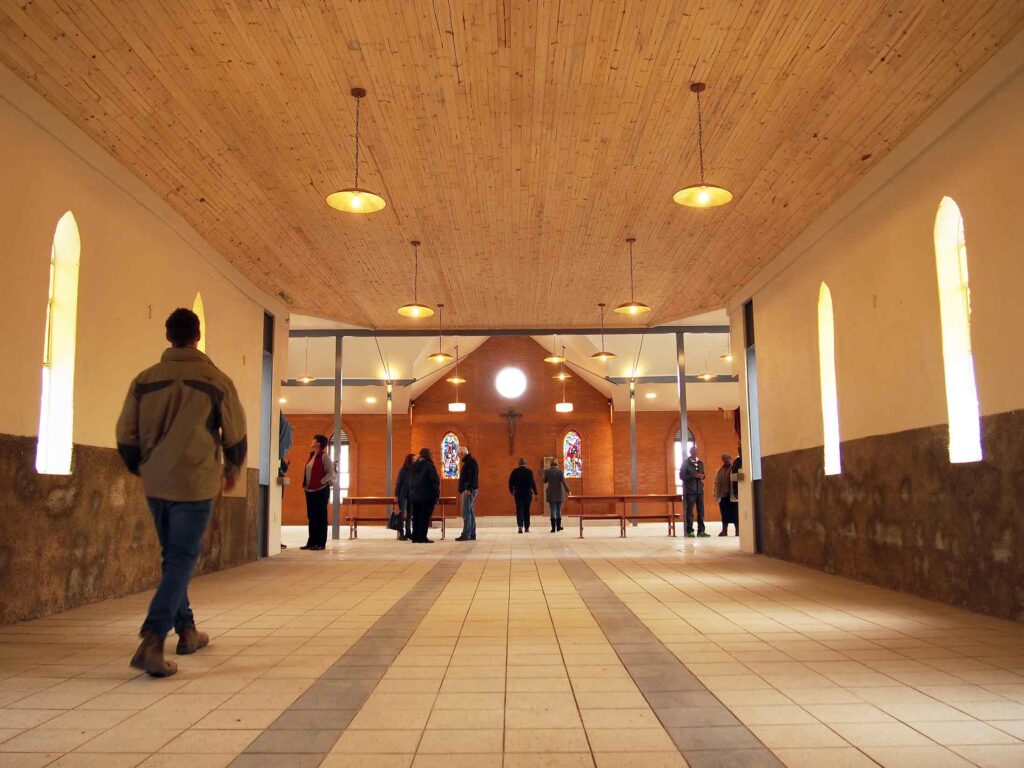
The original sanctuary, along with its flanking office and storeroom which were removed to accommodate the expanded church, is subtly commemorated in the new flooring. A fine brass inlay embedded in the paver finish traces the exact footprint of these earlier structures, preserving a quiet but powerful memory of the site’s evolution.
As part of the project’s sustainability strategy, the formwork for the pointed-arch windows was conceived as a permanent element: a steel louver system that enables passive cross-ventilation while eliminating formwork waste.
Additional sustainable and community-based contributions include: Rainwater harvesting: All water for ablution facilities is collected and stored on-site in vertical tanks. Local craft integration: Lighting pendants were created by local beadwork artisans, incorporating traditional patterns and techniques. Ethical sourcing and fabrication: Timber pews were manufactured by a prison workshop, supported by a parishioner, using locally sourced saligna.
Recognition & Awards
SAIA Special Mention – Lead Architects AfriSam-SAIA Award for Sustainable Architecture + Innovation (2017/18) – Use-It for “Rambrick” development