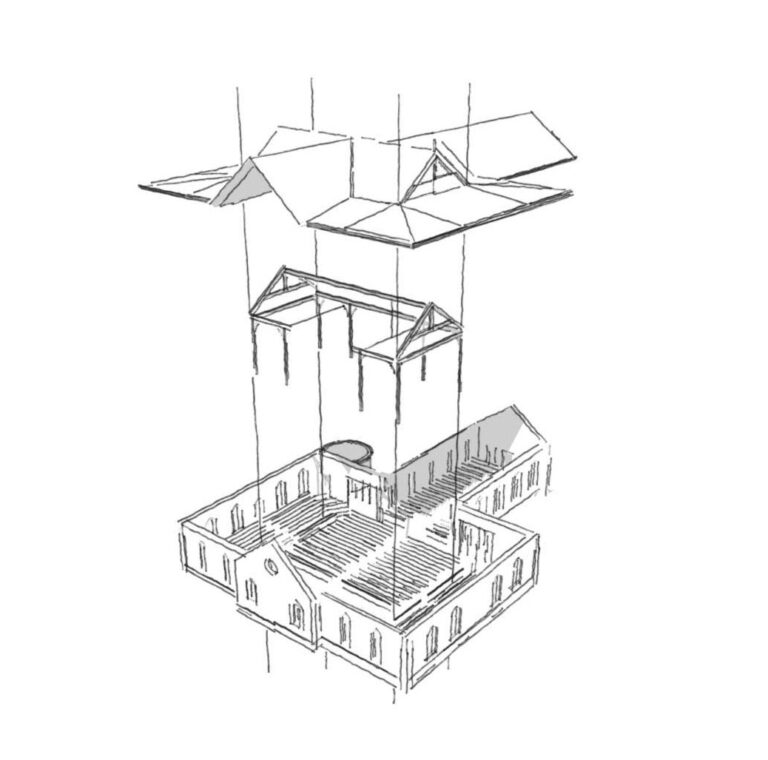
weBambu EcoSchool – Inchanga Seed Project

A Masterplan is a large scale plan that incorporates surveys, infrastructure and existing / proposed buildings. Research and analysis driven Masterplanning results in a blueprint that communicates a long-range strategy for how a site can evolve over time.
A good Masterplan is holistic and considers key spatial relationships, movement flows, environmental conditions, regulatory constraints, infrastructure requirements, and user needs, finding a balance between the client’s ambition and practical feasibility.
Whether you’re working with a vacant site or a complex existing campus, a Masterplan offers clarity and it helps stakeholders align by identifying constraints early on.
A Masterplan sets up a framework for phased development ensuring that future design decisions and budgets are informed by a coherent overall vision.
Methodology
Each masterplan begins with a thorough process of analysis and engagement. This includes on-site observation to understand how the place works – how people move, interact, and experience space – as well as project-specific digital surveys or questionnaires to gather targeted input from users and stakeholders.
Historical and archival drawings, zoning information, and GIS mapping are layered into the process to build a comprehensive picture of both constraints and opportunities. In some cases, a land survey may be required. Depending on the site constraints or other project requirements (such as accuracy or speed), drone mapping and LiDAR scans may be required.
Masterplanning typically draws on multiple related services such as Measured Surveys & As-Built Documentation, Conditional Assessments, and in some cases Heritage Consulting, to establish a clear and accurate status quo before envisioning what comes next.